Showing posts with label cider. Show all posts

Saturday, November 19, 2016

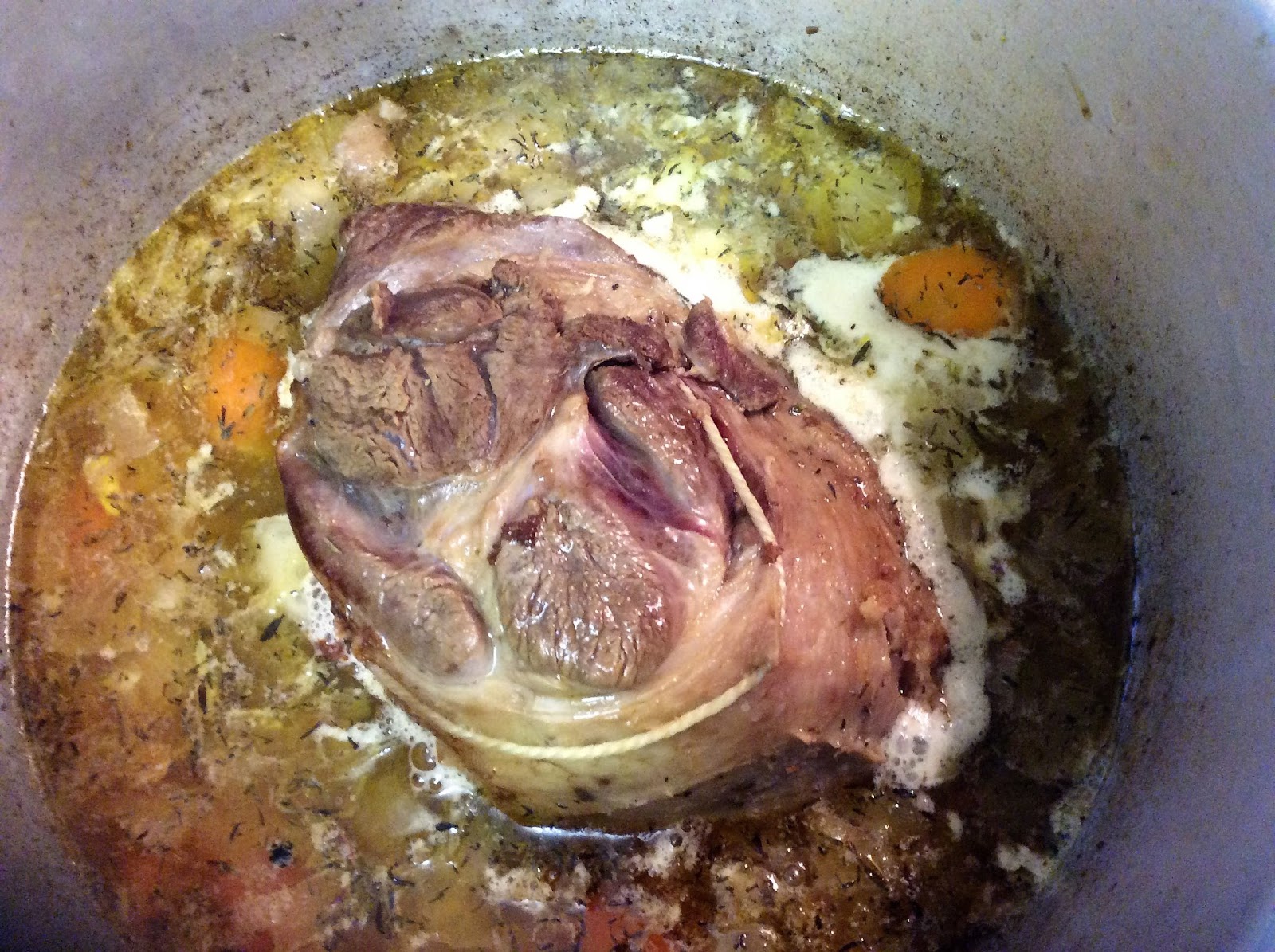
Snakebite Lamb


This is a take on an old English recipe for boiled mutton. You might think I've added an unnecessary, not to say dubiously fusion, twist with the tablespoon or so of fish sauce. But fish sauce, or nam pla in Thailand, is nothing more than anchovies and salt, with the final addition of a little sugar, left to naturally ferment for months, and sometimes years, dripping forth its pungent red-brown liquor.

It is little different to the many European fish sauces made with anchovies and salt, brought by the Romans to Albion, and known as garum and other names. Many are the robust, devilled English recipes that demanded fermented fish sauce, and later its distant niece Worcestershire sauce, and there are few finer combinations than roast lamb studded with anchovy fillets and garlic. 

Yes, rosemary if you will, but it's the salty fish and lamb/mutton taste that makes the dish, which is why saltmarsh lamb that stuff themselves on samphire and seaweeds on places like Romney Marsh and the Gower provide such wonderful feasts. 

The snakebite combination of cider and lager, of course, works well too. The lamb is first simmered in sharp scrumpy and then is improved with the bitter taste of fermented hops later on. A little mustard, thyme, and lots of garlic, and the dish is complete.

1kg boned leg of lamb
500ml scrumpy cider
250ml lager beer
10 cloves of garlic
10 whole peppercorns
2 bay leaves
2 tsps English mustard
1 tsp dried thyme
1 tbsp fish sauce
1 large onion, chopped roughly
2 medium carrots, sliced diagonally
1 tbsp olive oil
Salt to taste

Heat the oil in a pressure cooker on a medium-heat hob and fry the onions for a couple of minutes, stirring all the time. Tilt the pan and push the onions to one side then brown the joint of rolled lamb. Keep turning the joint, making sure it is brown all over, and the onions don't catch. 

Add the carrots and bay leaves and fry for another two minutes, adding a little water if the bottom begins to catch. Then add the scrumpy, peppercorns, mustard, fish sauce and five cloves of garlic. 

Put the lid on and cook under a medium pressure for 20 minutes. Then open the cooker, turn the lamb, and cook under pressure for another 20 minutes. Take the lid off and add the beer and the other five clove of garlic. 

Simmer uncovered for one hour, turning the lamb regulary, until the liquid is reduced by a third - this should take between 40 minutes and an hour, depending on the heat of the hob.

Allow the lamb to rest for 20 minutes in the pan, then carve into thick sliices and serve in a bowl. Add a couple of ladles of the lamb liquor, and serve with boiled potatoes and green vegetables.

Wednesday, April 30, 2014

Pork Belly Parcel With Sage


This really is one of the simplest recipes, and it’s a belter - particularly if you want to sup wine with any guests you might have hanging around, rather than slave in the kitchen missing all the banter. 

It’s also an excellent choice if you fancy just bunging it in the oven, while you nip off to the gym or something, without worrying about the house burning down in your absence.

It uses three of the things that go best with pork - sage, onion and cider. Indeed, while we’re on the subject of sage, it’s also probably quite a restorative dish if the Romans and others were right. According to an old English custom, eating sage every day in May will grant long life, immortality even (but who wants that), hence the proverb: “Why should a man die who has sage in his garden?”

The sweetness of the onions is cut by the cider, which you add towards the end, to make an amber liquor smacking of sage and black pepper. When I made it last night, I bunged a couple of potatoes in the oven to bake while the pork was slowly cooking. Then I served it with finely sliced carrots, broad beans and peas.

You could thicken the sauce by making a roux with butter and flour and then stirring the pork liquor in, but sometimes life’s too short for that sort of thing, and besides the spuds are good for soaking up the juice.


PORK BELLY PARCEL WITH SAGE
(Serves 2-3)

1 small rolled pork belly joint, about 750g
2 small onions, sliced
20 sage leaves
Salt and pepper
200ml dry cider

Take a large piece of foil - about enough to cover two chopping boards. Lay the sliced onions in the centre, to form a bed big enough to rest the pork on. Tear up the sage leaves and scatter over the onions.

Sprinkle the pork joint liberally with salt and then nestle on top of the onions and sage. Season with black pepper - a good few grinds of the pepper mill. Then tuck the foil sides inwards and fold up into a parcel. Put in an oven tray, and into a pre-heated, low oven - about gas mark 4 or 160C.

After an hour and a half, take the pork out and crank up the oven to maximum heat. Open the foil, to form a bowl shape that will keep the juices in, and pour the cider over the pork. Season with more salt and pepper, and put back in the oven for another 20 to 30 minutes until the crackling is golden.

Take out of the oven and rest for 20 minutes before cutting into thick slices and devouring.


Thursday, February 27, 2014

Lamb Hearts Braised In Scrumpy


Hearts are a very underestimated choice of meat, and should be used much more than they are. Not only because they are cheap - around £3.50 per kg - but because they have a delicious flavour and texture. They also have just enough fat to thicken the meat liquor slightly.

It is important you use a decent cider for this. Ideally a good scrumpy, but if you’ve drunk it all, a full-bodied still cider will do. The other beauty of this dish is it takes only a couple of minutes to prepare, if that. You just bung it in the oven and wait for it to cook while finishing off the rest of the cider.  


LAMB HEARTS BRAISED IN SCRUMPY
(Serves 2)

2 lamb hearts
1 pint scrumpy
2 carrots, diced
2 slices swede, diced
4 sticks celery, diced
2 garlic cloves, chopped
Salt, pepper
1 tsp fresh thyme, chopped
Two handfuls of frozen peas

Wash the hearts and put them in a casserole dish. Surround with the diced vegetables, thyme and garlic. Pour in the cider and season the hearts and vegetables liberally with salt and pepper. Cover the dish with foil and cook in a pre-heated, medium oven for one hour.

Take out, remove the foil, and stir the vegetables, and turn the hearts over. Add the peas, put the foil back on, and cook in the oven for another 15 minutes. Serve with a baked potato and plenty of English mustard. 

Monday, January 10, 2011

Vegans And Starting A Raw Food Diet


At this time of the year, a lot of people give up the sauce for a month after the port and gin festive excesses. Some go on diets, or give up meat for a month, and some even try to pack in the fags. I’ve done none of these things, mainly because I’m cursed with an addictive personality and have the determination and procrastinatory powers of a caned sloth.

But one thing I have been doing is drinking. Nothing unusual there I hear you say. But I’m talking about drinking - or should that be eating? - a thick, raw food smoothie every morning.

It was sparked by a raw food course I went on (it’s a long story, but basically I turned right rather than left at the end of the corridor, and instead of the ‘how to build a cider press workshop’ found myself on a vegan ‘living in the raw’ course - I should have known really from the pompous, sniffy looks and the lack of beards and scrumpy tans, well there were some impressive beards in there, but anyway one good thing did come of it, and that was the discovery of the green smoothie...)

Now I can’t pretend to like them, but it does mean I get pretty much all the vitamins I need for the day in one hit, and can spend the rest of the day smoking fags and drinking beer - relatively guilt-free.

The tutor explained the “current thinking” that eating five portions of fruit or veg a day was actually the bare minimum for good health, and the required amount should be nearer nine.

NINE!

I have to admit to a mild panic attack at that point. I looked back on my diet over the previous few months: if you counted the white cabbage in my kebab, I’d be lucky to hit two a day. Something had to be done. And for lazy, single buggers like me who enjoy cooking for others but rarely cook for themselves, the raw food smoothie seemed to be the answer.

“A green smoothie is the perfect way to start the day,” preached the tutor. “Indeed if there was just one new thing you introduced into your diet a day, beside raw chocolate (she got a laugh at that point – I was the only bloke in there) then this should definitely be it. Yuck I hear you say! But believe it or not green smoothies can not only be delicious, but also addictive.”

Now, I wouldn’t go as far as that. Nowhere near in fact. But after you’ve downed a couple, and that really is the only way to eat - or is it drink? – them, they do have an odd, slightly moreish quality. In my case, it’s probably the satisfaction of knowing that I can order my kebab later without having to ask for extra salad.

The following is a recipe I’ve tinkered with that produces a lovely, earthy-coloured smoothie (see photo above). Try it – it’s not that bad. And it does make you feel a lot better. But don’t drink it before a long journey...

Lennie Nash’s Wonderful Earth Smoothie

1 banana
4 young kale leaves (or spinach)
1 eating apple, cored
1 small carrot, peeled
2 sticks celery, peeled
Good squeeze of fresh lemon to taste
2 tsps pumpkin seeds
2 tsps sunflower seeds
2 tsps linseed
Sprinkle ground cinnamon
½ tsp chorella
1 tbsp fresh or frozen berries (blackberries, strawberries or blueberries)
1 tsp organic honey
1 pint water

Soak the seeds overnight in a cup full of water and drain. Then put all the ingredients into a blender (a Vita-Mix 5000 is brilliant for this) and whiz until smooth. Add more water if it is too thick. Pour into two glasses and gulp (quickly).