Showing posts with label Georgian food. Show all posts

Tuesday, May 26, 2020

Georgian Food: A Culinary Journey In Tbilisi (Part 6)


It took a long time to get back to Freedom Square and the road that led to Mariam’s shed. On the way, I walked down an alley to a kebab shop that specialised in Iranian and Afghan dishes. I sat at a table near the door and ordered a “chicken on the bone kebab” when a fight broke out. Two large men burst into the restaurant, yelling and baying for blood. One of them looked like a Viking in a blue puffer jacket, the other was equally broad and had a red pug nose. A Georgian man finishing his meal looked at them and shook his head. The other customers looked on nervously.

A scrum formed and the restaurant staff – five or six Arabic men with large bellies, making up in weight what they lacked in height - slowly pushed the pair backwards towards the sliding glass door. The shouting went on for several minutes and finally the intruders were pushed out of the restaurant. The owner locked the door. “Georgia!” he said. The waiter returned to finish my order and made an apologetic gesture about the noise.

The dish came in an unnervingly quick time to cook chicken on the bone. There were bony pieces from the back of the chicken, and a couple of wings and drumsticks. The meat looked nicely cooked on the outside, but was red and jelly-like close to the bone, and had the gamey smell of pheasant. I figured they’d had too bad a night already to complain. I ate the salad and the naan bread and then thought what the hell and ate some of the whiter chicken meat. I paid and headed off to Mariam’s shed. It was 1.20am. I’d arrived at a similar time the night before and the iron portcullis that led to the courtyard garden and noticeboard of compliments had been open, but this time it was shut. I pushed a few times but it was definitely locked.

I began to think about all sorts of horrible possibilities, knowing my bag and passport were inside. I knocked a few more times and pressed my ear to the gate but there was no sound from within. Next door was a basement bar. Three customers came out to smoke. I asked one of them for help. He was an olive-skinned man in his early 20s and spoke good English. I asked if he could see a buzzer on the gate. “A bell?” he said. I nodded and in our drunken state we felt round the gate. He turned on the light on his phone. But there was no bell or knocker, only the name Hostel Mariam with a phone number underneath. It was printed on A4 paper and stuck to the door with sticky tape.

“You live here?” he asked. “How long?” I told him it was my second night. “You have your clothes here?” He shook his head and clicked his throat in disgust. We both knocked again on the iron gate. My knuckles were getting raw and the banging made very little sound. I shoved the door a few more times. The night before, the gate had been wedged open with a brick and I was wondering whether the brick had become wedged under it, but it was definitely locked.

I started getting a horrible anxious feeling, and the winter air seemed to bite much harder. The thought of spending a night on the street wasn’t a pleasant one. The man blearily examined the gate again, then typed the number on the wall into his phone. I thanked him a couple more times. The phone kept ringing and cutting off as he made disgusted shakes of his head. He was definitely on my side.

Suddenly there was an answer and he started babbling away in Georgian. His tone slowly got aggressive. It wasn’t a good sound to hear. After a minute, there was a pause while he flicked away at his cigarette. There was a barrage at the other end. It sounded like a dragon breathing fire. “Is it a woman?” I asked. “Yes, it’s an old woman,” he said. “But I don’t know what she do. I think she’s lying. She says you only have a small bag there and you move out.”

He dialled the number again, crushed his cigarette with his foot, and then lit another one. A voice came back on the phone, and his tone got more aggressive. He checked with me again. “You sleep there?” he asked. “Yes,” I said. “You have your clothes there?” “Yes,” I said. Then the phone went dead. He swore and began to redial. “What happened?” I asked. “She says you check out. She not come to the door. She has a bad heart – it’s hard for her to get up. I think she’s lazy.” He tried the number again but there was no answer. I was already thinking about the park bench I’d sleep on. Without my passport, it would be very difficult getting a hotel. Then I thought about Babar’s hostel and whether there might be a spare bed there. Did they still keep the door open when Babar wasn’t turning up in the middle of the night?

My new friend, and I really don’t know what I would have done if he hadn’t been there, tried the number a few more times and finally got through. The conversation quickly turned into an argument. I could hear a hurricane coming down the phone. He kept checking with me that I “had my clothes there,” and kept shaking his head. Eventually he said: “I think she’s coming.” I thought I could hear distant noises from inside the courtyard, but after 10 minutes just put it down to hope. Then finally the door opened and there was Mariam, her orange hair stuck up in rollers like a medusa, hailing a torrent of abuse.

She was leaning on her stick and rubbing her back much more than I’d seen her do before, making whimpering noises interspersed with full-blown rages of hate. I stepped through the gate, afraid it would shut again, and for a minute she swore at the young man and his friend who had wandered up to watch the spectacle. She slammed the door shut and clenched her fist, making hammering gestures in the direction of my nose. She carried on shouting and I did my best to rectify the situation. I helped her as she hobbled back through the courtyard to my shed door. My bag was on the table outside, underneath the vines. My toothbrush and toothpaste were on a chair next to it. She’d cleaned out my room. I panicked, thinking about my belt pouch containing my passport and money that I’d hidden under the mattress.

Mariam continued to rant at me, pretending to hammer my face with her right fist, as she gripped her stick with the other. I kept telling her I hadn’t said anything about checking out. Her punching motions got closer to my nose. One slip of her walking stick, and my nose would be as flat as a khachapuri. Eventually she unlocked the door to the shed and we walked in. I kept saying “no check-out” as she continued her attack. She said nothing about the English being “number one” this time, and the only thumbs-ups signs were the ones directed at my face. I realised she was probably mad.

She pointed at the beds and I pointed to the one I’d slept in, and she turned back the cover. While her back was turned, I checked under the mattress and found my belt pouch. Nothing appeared to be missing. The cash seemed to be about the right amount and the passport and bank cards were there. I handed her 25 laris for the room, then she left. The shed was freezing. The water jug had a slight sheen to it as though it was about to ice over. I shut the door and found she’d taken the remote control for the air conditioning, which when you put it up to its maximum of 16C was the only way to heat the room. I took the blankets from the other beds and piled them on top of me. I decided to check my emails and realised she’d turned off the wifi as well.

I woke early. There was no banging on the door this time and there was no sign of Mariam in the courtyard. I dressed and wandered out to the other shed to brush my teeth. It was far too cold to shower. I stood outside my shed for a few minutes gathering my thoughts. There was still no sign of Mariam. Normally she would be peeking through the net curtains, but there was no light in her kitchen. I found a plug outside my shed that led to a bundle of wires and managed to put the wifi back on. It also turned on the porch light.

I lay on my bed, shivering and searching on my tablet for hotels. It was still a few hours before check-in times. I went to the toilet. I heard no noise in the courtyard, but returned to find the outside light was off and so was the wifi. The plug had been taken out and the bundle of spaghetti was dangling down as it had been before. I took it as a sign that I was definitely no longer welcome.

I packed my bag and walked past the mandarin plant and the noticeboard with all those cheery messages. I could feel eyes on my back. Mariam’s black cat was sitting on a chair near the gate and was watching me with narrowed eyes. It hadn’t liked me when I first turned up, but now it looked particularly unfriendly.

I pulled the gate open and ventured out into the rain-drenched street. The basement bar next door was shut. At the end of the road was a small hotel with Christmas lights in the window, but I wanted one further away from Mariam. That cat had put the chill into me, and in my bleary state I began wondering whether Mariam had ailuranthropic powers – she certainly had the temper for it.

(Continues...)

Sunday, May 24, 2020

Georgian Food: A Culinary Journey In Tbilisi (Part 5)


(Read part one of trip HERE)

After another 20 minutes, Babar still hadn’t come out of the sulphur springs. He’d told me not to wait for him so I went off to look for a hotel. I couldn’t do another night in that hostel. I walked past a gorge to the famous Orbeliani Baths, set in a beautiful, Turkish-style building decorated with blue, white and brown mosaics. Outside was a plaque with a quote from Russian poet Alexander Pushkin, written in 1829: “Never before have I seen, neither in Russia nor in Turkey, anything that can surpass the magnificent baths of Tiflis.” I’d read somewhere about how he’d also been a big fan of the local food: “Every Georgian dish is a poem.

In a side street, a woman was selling pomegranate juice. She crushed a couple and handed me a paper cup full of red juice. It was delicious – a hundred times better than the stuff you get in cartons, and I wondered how it would taste with a shot of vodka to keep out the biting January wind.


I checked a few hotels but they were all full. Then I saw Babar hobbling up the road. He said there was a cheap hotel around the corner that might have a bed. We walked through a metal gate into a courtyard cluttered with old furniture and pot plants. An elderly woman with dyed orange hair came out to meet us. Babar chatted away to her and told her I was English. She gave a thumbs-up and said: “English number one.” Mariam, as her name turned out to be, said her brother’s son was working as a doctor in London.

“She’s got a shed that’s free,” Babar said. Mariam grabbed my arm, making another thumbs-up gesture, and opened the shed door. A small electric heater hung from the ceiling. It was colder in there than the courtyard. The inside was lined with hardboard and psychedelic grey wallpaper. There were three beds. The largest had a duvet covered in shiny gold fabric. I asked about the other beds, and Mariam said I could have the whole shed to myself for 25 laris (about £7). I handed her the cash. “Are you only paying one night? If you’re going to stay longer, I’d pay her in advance,” Babar said. I told him I’d see how the first night turned out and whether I’d survive the cold. “Well, it’s up to you – but this is Georgia,” he said. If only I’d known how prophetic his advice would turn out to be.

I told Babar I’d buy him lunch for helping me out. He said he’d been to Georgia five times but still hadn’t tried khinkali – the country’s famous dumpling dish. Mariam sat down on a courtyard chair, winced, held her back, then got up again. “Oh khinkali,” she laughed. “Restaurant there, there and there,” she said pointing in all directions.


We found a cellar restaurant up the road and headed in. I’d heard the Georgians weren’t that fond of fish, but there were several fish dishes on the menu, including roasted red mullet for the ridiculously cheap price of 9 laris (just over £2) and trout with pomegranate sauce for 11 laris. There was a whole page devoted to khinkali. We ordered four types - beef, lamb, cheese and mushroom. They came with a ramekin of mild chilli sauce. The lamb ones were the best. The meat had been minced and flavoured with fresh coriander, cumin and garlic from what I could tell. Babar finished his bottle of Coke, insisted on paying half the bill, then headed back to his hostel. I ordered another beer. “You’re not going to drink in here all afternoon being miserable are you?” he asked. I said I’d go for a walk round the city later. 

But my plans changed when a folk band came in and did a soundcheck for the evening. One of them played a panduri – a three-stringed, lute-like Georgian instrument - strummed with the fingers in a raking, clawed action, often at high speed. They swapped instruments and took it in turns to sing. The accordion filled out the sound and the bass played intermittent, sparse notes.

But what made it was the interweaving vocal melodies. It wouldn’t be much without the singing you might think, but they played some beautiful instrumental Georgian folk songs too. They were great players. Towards the end of the night, they let me have a go on the panduri. I plucked a few strings, but they said it had to be strummed. When I got back to my shed that night I watched a video on the internet of a Georgian man described as the Jimi Hendrix of the panduri. He played at such breath-taking speed you could hardly see his strumming hand move. It was a blur - the faster he strummed, the slower his hand seemed to move, like one of those ‘thumb cinema’ flip books.

It was bitterly cold in that shed, even with the blankets from the other beds piled on top of me. I got to sleep when the sun came up, and woke about noon. Mariam was frantically knocking at my door, shouting: “English! English! Alexander! Alexander!” I dressed quickly and found her clutching her walking stick, slumped in a garden chair outside my shed. We had some sort of conversation delivered through mime and the occasional word we both understood. I told her I was staying for another three nights. I pulled out a 100-lari note and asked if she had change. But she just brushed it away, and the way I understood it, said there was no hurry about paying. She gave another thumbs-up and said: “English number one.”

I rolled a cigarette and two large, bald men walked into the courtyard, eyeing the place up and down. They looked like gangsters. The first one, who was clearly in charge, was puffing at a cigarette and stubbed it out in a flowerpot. I was mid-sentence, or at least mid-mime, when he butted in. At first I thought they were Mariam’s relatives, perhaps cousins of the mystery doctor. They looked at me as I smoked my roll-up and I heard Mariam say: “Cigarette!”

I began examining my city map, then had trouble folding it back up again. She followed them outside and was gone for a few minutes. I’d finally folded up the map by the time she came back. “Polizia,” she said. “They look. Good,” she said giving another thumbs-up. “Good to look.” I told her again I’d stay three more nights. I said I was going to get change for the 100 lari note, but she waved the note away and smiled.

Then she clutched her spine, grimaced as she got to her feet, and pointed at one of the plants. “Mandarin,” she said. It was a broad-leafed plant in an old paint tub. It was barely two feet high in height and I was amazed it could survive such freezing temperatures, but it looked healthy enough. “Orange?” I said, forming a small circle with my hand. “Yes, yes,” she said looking at me as though I was an idiot for not knowing what a mandarin was. 


I’d liked to have seen her courtyard garden in the summer. There were vines running across the ceiling and the place would have been filled with leaves and grapes. Now they were just thin strips of wood snaking around the walls and the lean-to next to my shed. There was a stocking of dried black grapes on the table, showing what they produced when the leaves returned in the spring. On the wall was a noticeboard with pieces of paper pinned to it. Messages written by previous residents. Most were in Russian or Georgian, but there were one or two in mangled English which basically said Mariam was a saint who ran a five-star establishment and there were few fit to pray at her feet.


I wandered around the city and finally found a place I’d been told to visit – Fabrika, a trendy backpacker spot and haven of industrial chic. Put it this way if there was ever a shortage of beards in the world, they could always go to Fabrika. It was an old sewing factory that had been converted into a huge hostel complex with 24/7 working hubs for geeks in beanie hats and head wraps who do things on computers and talk about servers, algorithms and time zones.


At the back was a courtyard of bars, restaurants and trendy shops. In the middle was a vintage car, light blue in colour and suitably Instagrammable. I wondered how many social media accounts it had appeared on around the world. At the far end was a VW Camper van that had been turned into a photo booth. Next to it was what looked like a giant ship mine. The factory brickwork was daubed with graffiti – one scrawl in vibrant yellow said: “Kids are the best humans in the world.”


Not that there were many kids there. The youngest people seemed to be the trendy Georgians working in the restaurants and bars. Most of the hipster customers were older and had seen better days. Their skateboards did little to conceal their age. Some of them were old enough to remember when beards were fashionable first time round. The women favoured fake leopard skin coats and fur-lined parkas.

You could tell it was Tbilisi’s place to be from the prices. Although it was still very reasonable by European standards, there were far cheaper restaurants – and hostels - in the city beyond the concrete and glass. But what right-minded flashpacker wanted to brave the traffic and stray dogs out there? Why weave your way through the narrow, dark streets when you could drink in the courtyard bars and crash in one of the factory’s bunk beds?

There was a burger bar offering the usual fanfare and ridiculously-named “hand-crafted” patties. Next to it was a bar specialising in board games, and a ramen noodle joint whose owners had clearly studied the Wagamama format. I settled for the busiest bar – the Moulin Electrique. It was a great place. A bar that promised Georgian food and a moody playlist. Massive Attack, Portishead and occasional acoustic guitar skits from Nick Cave wannabes. Clearly knowing the age of its customers, Pink Floyd’s Dark Side of the Moon came on and all was going well before Jamiroquai took a turn.

The food came quickly and was pretty good. If you wanted to see a future direction of Georgian food, then the menu was probably a pretty good indication. They still had the traditional dishes, but some had been tweaked and were described as in the “Moulin style”. I noticed avocado and coconut had crept into the menu too. There were cold dishes like cheese plates, pickle plates and what they called bread tapas – a platter of khachapuri. There were also 14 salads and 14 soups, including the intriguing-sounding pea soup with smoked ribs.


I ordered chicken broth with meatballs and egg, and something called a Georgian sandwich. The broth was a light chicken bouillon, that I suspected had come from a packet, with five grey meatballs made from minced chicken, onion and herbs, half a boiled egg buried at the bottom, a dill garnish, and slices of toasted baguette on the side. The sandwich was excellent – cheese slices and peppery mayonnaise stuffed in a fat, oval-shaped roll, somewhere between naan bread and airy panini. I asked a waitress whether it was a traditional Georgian sandwich, and she shrugged and said: “Well, it’s Georgian bread.” 


I washed it down with glasses of the local Black Lion draft lager, which I had taken quite a liking to. It was delightfully sour for a lager with the sort of hoppy notes a craft beer enthusiast could drone on about for an hour. It tasted more like those pale ales the Americans favour rather than a typical bland European lager, but thankfully the bubbles lasted to the end of the glass, and it was disturbingly easy to drink. But at four laris for 400ml, who cared.

The Christmas lights came on as the sun set and glistened in the factory glass. Outside, a giant tin of Campbell’s tomato soup that served as a beer table sparkled in green light. The wind picked up and a man walked down the steps from the work hub, clutching at his head. He was trying to stop his combover flapping in the wind as he put his beanie hat on.

The place was achingly cool, but somehow less pretentious than the industrial chic hipster joints you get in Sofia or Berlin, and far less so than those in Shoreditch and Hoxton. I was beginning to see what all the fuss was about and why Georgia was increasingly becoming the place to say you’d travelled through. I sat in the Moulin Electrique all evening, slowly building up a tab. I saw the customers come and go and felt happy. I sat there scribbling into my notebook, listening as the music went from shoegaze guitar bands to trance to a lengthy stint of Bob Marley to James Brown and then more modern funk.

Most of the night-time customers were Georgians and what beautiful people they were. It was a pleasure to be among them. But I wasn’t looking forward to navigating the tortuous route home. Finding your way through Tbilisi in daylight is hard enough, but late at night it was near impossible. I was doing well for a few streets, and then I got lost searching for the bridge that would take me back across the river to the old town.

I found myself in a dark underpass, lit only by the pink lights of a strip show. Dodgy-looking men were huddled in corners. I turned round, went under a flyover, past another strip club and found myself at a brightly-lit square with a McDonald’s and Subway restaurant. These were the first Western fast food chains I’d seen since I’d got there. I walked into the McDonald’s to use the toilet. There was a security man on the door. The place was packed and chaotic. No-one seemed to know where the queue began and there were not enough staff to cope with the orders.

I looked at the menu and was shocked at the prices. A Big Mac meal was 18 laris (nearly £5), about the same price it is in the UK. Yet the average salary in Georgia was barely £350 a month, and the place – all two storeys of it – was filled with locals ravenously munching burgers as though they’d just spent a fortnight fruitlessly hunting deer in the mountains. For the same money, they could get a proper meal in a Georgian tavern with a couple of beers thrown in - and yet here they were in numbers. I hadn’t the heart to look at the Subway menu, but I imagine the prices were much the same. What was it that made Georgians pay so much to eat under the glow of the golden arches? It couldn’t just be the marketing and branding.

Friday, May 08, 2020

Georgian Food: A Culinary Journey In Tbilisi (Part 2)


(Read part one of trip HERE)

It was a turbulent flight and the passengers clapped as the plane bumped to a halt at Kutaisi, the mediaeval capital of the Kingdom of Georgia. A man behind me shouted: “Bravo! Bravo! Bellissimo as they say in Italy!” A woman told everyone to remain in their seats until the seatbelt signs were off. She then spoke for a few minutes in Georgian. It was a soft, pretty language. There was the nasally sound of Russia and eastern Europe, but it was faster and more playful somehow.

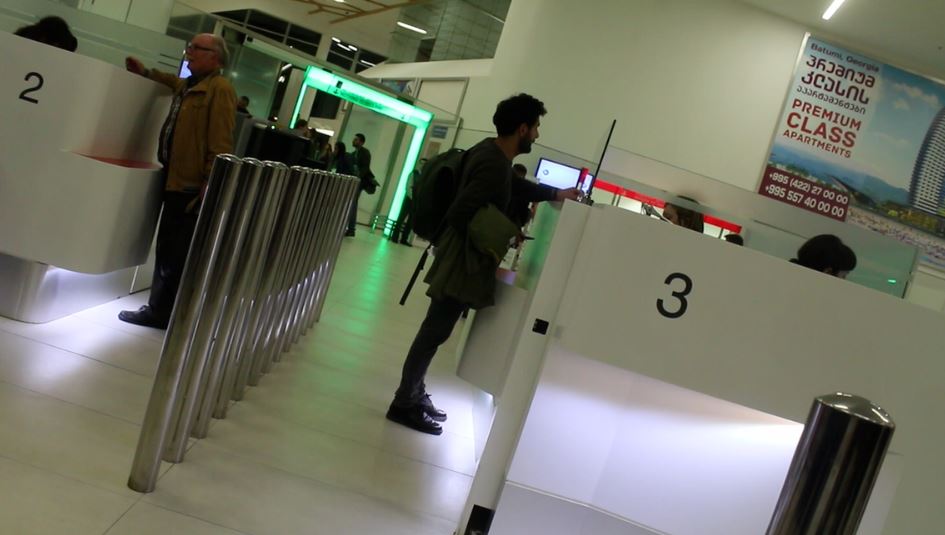
A gale was blowing. The airport was modern looking and empty. There was only one other plane – another Wizz Air jet – on the tarmac. The queue at passport control was long and slow. The immigration officers seemed to be asking for every passenger’s life story.

When it was eventually my turn, a woman spent a minute flicking through my passport looking at the stamps and visas. “First time in Georgia?” she asked. I told her it was. She stamped my passport with a year-long visa, then handed it back and said “bye bye”. She seemed surprised and slightly suspicious when I said thank you.


It was past midnight and there was a 30-minute wait for the bus that would take us through the mountains to the capital Tbilisi. I bought a large can of Georgian lager and a bottle of water for eight laris (about £2.50). I wondered how much change I’d have got out of a £10 note back at Luton Airport.

Then I thought better of drinking the beer; thinking about the five-hour bus ride ahead. I hadn’t had time to book a hotel and had no idea what I’d do when I got there at dawn. The bus was packed, mostly with British students. At first I thought they were part of a group tour led by an Asian man in his fifties who walked with a stick. He kept wandering up and down the aisle giving updates on when the driver was finally going to turn the heating down and put the ventilation on.

After another 30 minutes or so, the bus left the airport. We climbed slowly up through the mountains and I caught the occasional glimpse of the sheer side of cliffs. There was no yellow hum of city lights, just the twinkle of distant villages, like lakes mirroring the starry sky above. The roads were empty and we passed through endless hamlets where nothing stirred. Occasionally we’d crawl past a roadside café, but apart from the houses, the only buildings seemed to be gas stations, brightly lit and ghostly. There seemed to be so many that if you ran out of petrol you’d have less than a mile to walk to the nearest. I noticed the number of police stations too. Plush glass buildings with all the lights on, and the occasional police officer sitting at a desk doing paperwork. It didn’t make much sense. There wasn’t a soul on the road and no-one was up, and yet they seemed to have the police resources to stop a midnight riot in Paris.


Behind me, an English man was talking on his phone to a woman asking for money. She kept saying: “Not good, not good. I worry much.” She said her rent was due and he eventually agreed to wire her some cash and top up the credit on her phone. “Okay I love you,” she said as the call ended.

At some point we stopped at some great monstrosity in the middle of nowhere that seemed to be half food hall and half supermarket. The man behind tapped me on the shoulder. He was wearing a bulging red fleece, black-rimmed glasses and had a grey quiff. He looked like a fat Stewart Lee. He handed me a five-lari note, and asked me to get him a bottle of water. I hadn’t even planned to get off the bus. I was slightly annoyed at first, but then I realised he used a wheelchair. I looked at the note – on the back was a drawing of a man in shorts holding a fish and a bucket. I handed back the note and said I’d get him some water.

The food hall was empty apart from the sleeping staff and our weary bus party. And we weren’t spending from the look of things. After another interminable, spine-crunching journey through the hills, we joined an empty motorway and picked up speed.

I nodded off and woke to the neon signs of casinos and grand hotels in Freedom Square, in the centre of Tbilisi, where someone had once tried to assassinate US President George W Bush with a hand grenade. In the centre of the square was a huge column, topped with a gold statue of Saint George, the country’s patron saint. In the Soviet era, a statue of Lenin had stood there, but it was torn down in 1991.


Everyone seemed to have someone waiting for them. It was 5am, freezing and I suddenly felt very tired and alone. The man with the stick began to hobble off towards a subway. Either he had lost his tour party or he didn’t have one to start with. He was clutching a Lidl plastic bag that presumably served as his suitcase. I wandered after him and quickly caught up. I asked him if he knew of any hotels that were open. There was a Marriott hotel up the road, but it looked hideously expensive.

Babar, as his name turned out to be, said he’d booked a bed at a hostel and I was welcome to follow him there. We walked for 10 minutes down Rustaveli Avenue, which I would find out later was Tblisi’s main street and named after the mediaeval poet Shota Rustaveli, author of The Knight In The Panther’s Skin.

The city was glittering with golden light. There were hundreds of angels blowing trumpets. They were hanging from wires across the road, lighting up the impressive Soviet architecture. The trees were wrapped in fairy lights. Everything seemed to be gold. I asked whether it was always like this, but Babar looked at me as though I was an idiot and told me it was Christmas Day. The Georgians apparently used a different calendar and celebrated it on January 7. New Year’s Day, confusingly also called the Old New Year, was a week later on January 14. I was worried there might not be room at the inn. If not, there were a few 24-hour bars and restaurants I could sit in until it got light, Babar said.

He said he’d stayed at the hostel a couple of times. It was his fifth trip to Georgia. He was planning to buy an apartment and had already seen a few on previous visits. Property was supposed to be cheap in Georgia, but Babar didn’t look like he had a fiver in his pocket the way he was hobbling down the road with an NHS walking stick, adorned with plasters, in one hand, and a carrier bag in the other. I liked him straight away. He had a confident, easy-going nature and told me about his many trips around eastern Europe. He said his mother had recently passed away, and looked close to tears for a second. “She was my strength,” he said. But he was soon back to his cheerful way.

What worried me was the thought of a hostel. I hadn’t stayed in one for years. The last one had been a homeless hostel in Amsterdam after I had my passport and money stolen and found myself pacing the canals with just six euros to my name. It hadn’t been a pleasant experience. There must have been 40 men in that room. And the smell is something I still remember. It was the smell of rancid vinegar. The time before that, I’d been bitten alive by bedbugs, but that had been a particularly filthy place even by Cambodian flophouse standards.

I was still toying with the idea of finding a bar and drinking myself steadily through morning until the check-in desks opened. But it was bitterly cold and I was worried that Christmas Day might mean all the hotels were full or closed. I was even less confident about finding a bar open at 5am. It certainly didn’t look like a 24-hour city. But Babar said I could probably find somewhere to drink. “Not that I’m calling you an alcoholic,” he said.

I was desperately tired. Even the worst bed in the worst hostel in Gomorrah was better than pacing the streets for a few hours, even if the angels were looking down. Babar told me Airbnb had started opening up in Georgia and they were ridiculously cheap. But he didn’t like the idea of staying in someone’s apartment. “I prefer hostels because you meet people,” he said. He was right about that.

(Continues...)

Wednesday, May 06, 2020

Georgian Food: A Culinary Journey In Tbilisi (Part 1)


It all happened at the last minute, and pretty soon I was on the midnight plane to Georgia. According to the inflight magazine, it was a small country not much bigger than Wales. In fact, assuming the map was correct, if you stretched out the north coast of Wales about as far as the Isle of Man, then spun Wales 90 degrees to the right, it would be about the same shape as Georgia. It looked like a very bad drawing of a dinosaur. A fat dinosaur. A dinosaur that could barely lift its belly from the ground. And from what I’d heard about the hearty food and the Georgians’ love of booze, it might have been a fitting description.

The dinosaur’s head and neck was on the Black Sea and its body stretched east, stopping well short of the Caspian Sea. Its front feet were perched on the boulder of Turkey to the southwest, but to stop it sliding off, its belly was splayed on Armenia to the south, and its rear on Azerbaijan to the southeast. Directly north was the crushing weight of Russia.

As you can tell, I knew – and still know very little - about what travel guides often lazily describe as this “mysterious” and “secret” former Soviet stronghold. But in fairness, I’d been pretty much unaware of its existence until August 2008, when Russia snatched South Ossetia and Abkhazia like a school bully raiding a smaller kid’s lunch box. I was working for a TV news station in London at the time, and for a week covered every twist and turn of the war from the safety of my windowless hutch, spoon-fed by wire copy, and with only pictures from the ground to give me any sort of indication about what the place looked like.

I don’t remember much about the conflict now. Only that at the time I was pretty sure it was the beginning of World War Three, so brazen was Russia’s invasion. I’d been trying to give up smoking and make a substantial cut to my drinking, but the thought of nuclear missiles lighting up the sky quickly put an end to that, just as it did when Donald Trump came to power eight years later.

A line in the sand must surely be drawn, I’d thought. How could America and its Western allies stand by and watch the annexation of a sovereign country after all the kerfuffle over Iraq? Surely a stand would have to be made? A stand that would only be decided by bombs. But then, of course, little Georgia was an insignificant country that had no oil, and as few people knew where it was on the map, nothing was done. Georgia was rarely on their mind.

Instead, the West stood by like a shame-faced commuter pretending not to see a granny being mugged at a bus stop. And as I flew into the country in early January, more than a decade after that five-day war, Russia still held the land it took without a blush – and had absolutely no intention of handing it back.

So apart from Georgia’s famed hospitality and love of the vine, that was about all I knew about the region as I sat on that crowded five-hour flight from Luton Airport to Kutaisi, the country’s third largest city, reading about Georgian food in preparation for the week ahead.


I put some traditional Georgian music on my headphones. It had a strange, unearthly quality to it. Folk musos in ill-fitting Fairport Convention T-shirts might corner you at parties and tell you its beauty and ethereal nature comes from its polyphonic roots – interweaving vocal harmonies, often backed by a three-stringed lute called a panduri.

It sounds a little like Irish music when you first hear it, and there are DNA studies showing Ireland’s saints and scholars were descended from farmers and bronze metalworkers who travelled from the Middle East and Black Sea thousands of years ago. They may have even been the origin of the western Celtic language. All I can tell you is the music sounds old. Very old. Like the sound of ancient Gods lamenting lost loves and fallen heroes.

As for the booze, I knew Georgia claimed to be the home of wine, with archaeologists tracing the first known wine-making to the South Caucasus 8,000 years ago. The early Georgians apparently discovered grape juice could be turned into wine by burying it underground for the winter in qvevri – egg-shaped clay pots that have now become an official symbol of the country, and as I would discover, are found on everything from fridge magnets to tea towels. The only thing I couldn’t understand is what took them so long.

I’d also heard the beer was pretty good, and there were an increasing number of microbreweries making craft beer. The chacha, a sort of colourless rocket fuel like Greece’s tsipouro, could be dangerously strong. And the Georgians liked to toast anything, even a successfully-cooked soft-boiled egg for breakfast. The convention was to down your glass at every toast - with the drinking vessels getting bigger each time. There could be as many as six toasts, perhaps more, depending on the stamina and ruthlessness of the toastmaster.

I’d read a bit about Georgian food over the years, but the only two dishes I could recall as I sat on that plane, next to two Georgians watching kung fu films on their laptops, was a cheese-stuffed bread called khachapuri, that they sometimes shaped like a boat and cracked an egg into, and mushroom-shaped dumplings called khinkali.


I’d never eaten khinkali, so I switched on my tablet and watched them being made on a YouTube video. They resembled the tortellini of Italy or, perhaps more accurately, the momos of Tibet and Nepal. You make a dough from flour, eggs and water, but it is far less eggy than pasta – just two eggs to a kilo of flour, whereas pasta might take ten eggs for the same amount of flour. You roll it out thinly in circles a few inches wide, add a spoonful of spiced minced meat, cheese, mushroom or vegetable filling, crimp the sides, and then twist it into a clever shape and boil for 15 minutes or so.

They are shaped like a leprechaun’s treasure sack, and topped with a nipple-like pinch of dough to hold them together. You eat them with your hands, holding them by the nipple and biting in while doing your best to avoid gravy running down your chin. The nipple you put back on your plate. It is considered cheap to eat them, the video said - they help the waiter count how many you’ve eaten while totting up the bill.

I also read how Georgians like to flavour their food with cumin, blue cardamom, dried marigold leaves and pomegranates – but most of all with walnuts. If there is anything that really sums up Georgian food, it is the heavy use of walnuts, food writers seem to agree. They also like to eat plenty of fresh herbs with their food – and there is often a saucer or two of fresh sprigs on the table. 


The only country I’d been to that ate herbs like that was Vietnam, where a bowl of steaming noodle soup (pho) or delicious beef stew (bo kho) would always come with a basket of saw-edged coriander, paddy herbs and thinly sliced banana flowers.

Georgia, like every other country, has its regional dishes, with meatier dishes in the east and more vegetable-based dishes in the west. They also use tandoor clay ovens to bake bread and barbecue meat, and as a rule, do not eat a lot of fish. But it is not easy to summarise a country’s food; there are always exceptions. I read something by an American journalist who’d lived in the country for a number of years. He said there are two rules in Georgia – you don’t criticise their religion (nearly 90% of the population are Eastern Orthodox Christian) and you don’t criticise their food. I made a mental note not to do either.

I’d been told Georgia was a cheap, fast-growing place. I knew expats who were planning to move there from Thailand and Cambodia, saying southeast Asia had become too expensive. The country seemed to be crying out for foreign investment. There was a full-page advert in the inflight magazine for “citizens of any country” to buy flats in Georgia. The developers promised interest-free mortgages without proof of income, and a residence permit with every purchase. For 29,555 euros you could buy an apartment in Batumi, a casino-filled resort on the Black Sea. A few hundred euros more bought you a flat in a snowy resort on the Goderdzi Pass in Adjara.

It would, of course, be impossible to learn any useful idiot level of Georgian in just a week, but I promised myself I would try. If only it was that easy. It proved to be a very difficult language to remember, let alone pronounce. And by the end all I had gleaned – mastered would be far too generous a term – was gamarjoba (hello), diakh (yes), ara (no), getakva (please), me mkvia (my name is), mobrzandit (welcome) and bodishi (I am sorry). The latter would come in useful many times.

(Continues HERE...)