If you're lucky enough to have a garden, you may be fortunate enough to pull a couple of fat leeks out of the ground for this delicious recipe, as they're in peak condition at this time of year. If not, you'll just have to rely on the local bearded grocer like me.
It goes very well with roast pork and crackling as I knocked up for a meal last Sunday, with apple sauce, steamed kale, roast spuds and other trimmings. In fact, it's not often that a side dish takes centre stage, but it certainly gave the pork leg a run for its money, and if anything was almost as popular as the crackling. It doesn't require a lot of cheese, but the cheddar you use should be as full-flavoured and vintage as you can find.
2 large leeks
25g butter
25g plain white flour
350ml milk
250ml water
2 tsps wholegrain mustard
Few dashes of Worcestershire sauce
Salt and white pepper
3 tbsps breadcrumbs
50g vintage cheddar, grated
25g parmesan, grated
2 tsps fish sauce
Cut the leeks lengthways into four (keeping them attached at the root) then wash well in a tub of water to remove any grit and mud. Slice the leeks into inch-wide pieces. Boil 250ml of water in a saucepan, add a little salt, and then the leeks.
Stir well, then cover the pot over a medium heat for 30 seconds. Stir again, then cover for another 30 seconds. Do this for a total of five minutes - the leeks should have reduced in size by about a half. Remove the leeks and remaining water (which will have turned a pale green).
In the same (dry) pan, melt the butter and then add the flour. Take off the heat, and stir well with a wooden spoon to make a blonde paste (roux). Return to the heat and add the still-hot liquor from the leeks. Once the water is absorbed, add the milk, a little at a time, using a whisk to break down the lumps.
Once you have a thick sauce, add the mustard and fish sauce. Then add the grated cheese, stirring until you have a smooth sauce again. Check the seasoning, adding salt and white pepper to taste.
Add the leeks to the sauce and simmer for two minutes. Transfer to an oven dish, top with breadcrumbs and a few splashes of Worcestershire sauce, then cook in a pre-heated oven at 170C for 20-30 minutes until the top if golden.
Showing posts with label fish sauce. Show all posts
Showing posts with label fish sauce. Show all posts
Thursday, December 08, 2016


Saturday, November 19, 2016
Snakebite Lamb
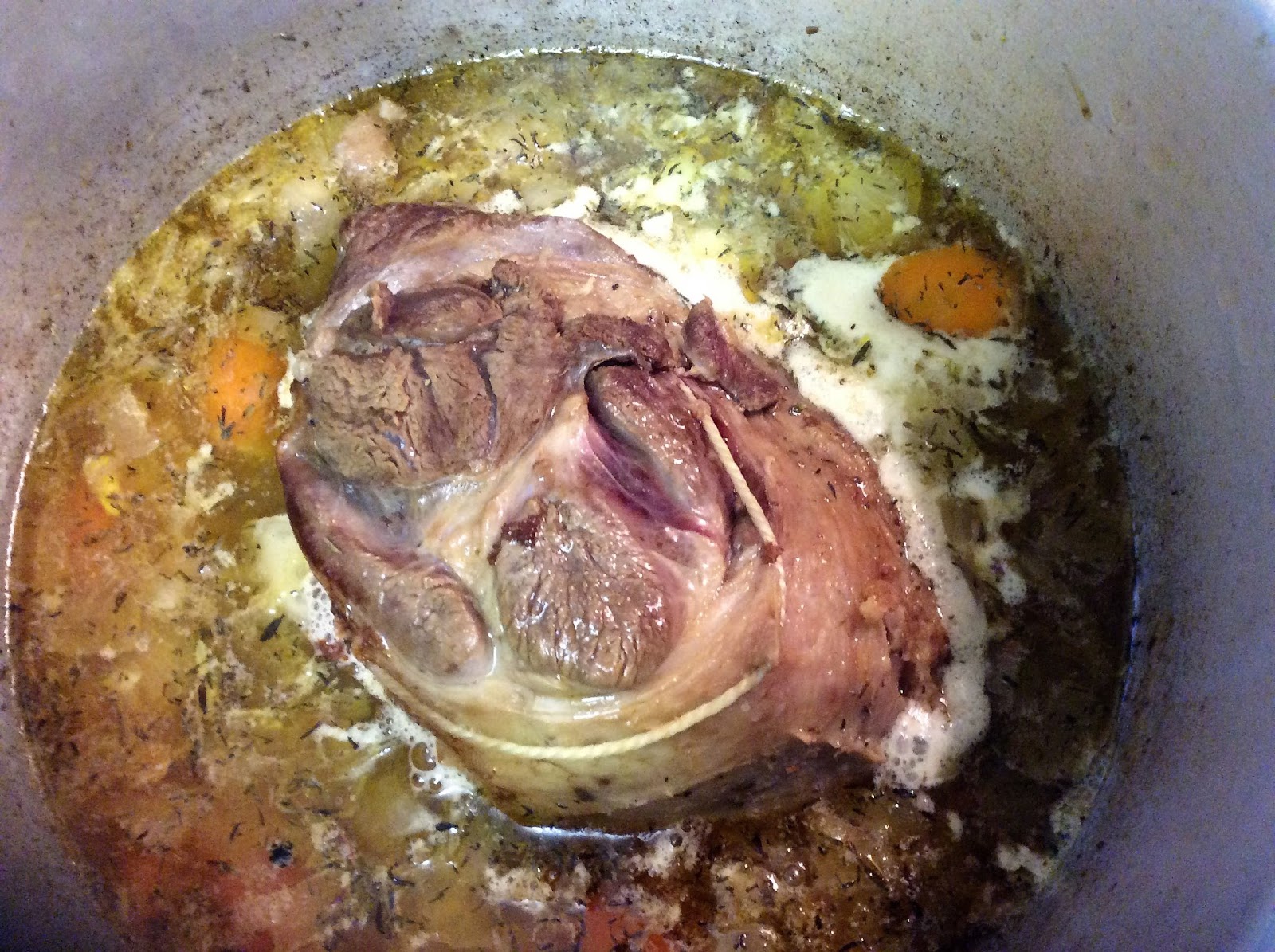
It is little different to the many European fish sauces made with anchovies and salt, brought by the Romans to Albion, and known as garum and other names. Many are the robust, devilled English recipes that demanded fermented fish sauce, and later its distant niece Worcestershire sauce, and there are few finer combinations than roast lamb studded with anchovy fillets and garlic.
Yes, rosemary if you will, but it's the salty fish and lamb/mutton taste that makes the dish, which is why saltmarsh lamb that stuff themselves on samphire and seaweeds on places like Romney Marsh and the Gower provide such wonderful feasts.
The snakebite combination of cider and lager, of course, works well too. The lamb is first simmered in sharp scrumpy and then is improved with the bitter taste of fermented hops later on. A little mustard, thyme, and lots of garlic, and the dish is complete.
1kg boned leg of lamb
500ml scrumpy cider
250ml lager beer
10 cloves of garlic
10 whole peppercorns
2 bay leaves
2 tsps English mustard
1 tsp dried thyme
1 tbsp fish sauce
1 large onion, chopped roughly
2 medium carrots, sliced diagonally
1 tbsp olive oil
Salt to taste
Heat the oil in a pressure cooker on a medium-heat hob and fry the onions for a couple of minutes, stirring all the time. Tilt the pan and push the onions to one side then brown the joint of rolled lamb. Keep turning the joint, making sure it is brown all over, and the onions don't catch.
Add the carrots and bay leaves and fry for another two minutes, adding a little water if the bottom begins to catch. Then add the scrumpy, peppercorns, mustard, fish sauce and five cloves of garlic.
Put the lid on and cook under a medium pressure for 20 minutes. Then open the cooker, turn the lamb, and cook under pressure for another 20 minutes. Take the lid off and add the beer and the other five clove of garlic.
Simmer uncovered for one hour, turning the lamb regulary, until the liquid is reduced by a third - this should take between 40 minutes and an hour, depending on the heat of the hob.
Allow the lamb to rest for 20 minutes in the pan, then carve into thick sliices and serve in a bowl. Add a couple of ladles of the lamb liquor, and serve with boiled potatoes and green vegetables.
Monday, August 10, 2015
Courgette Summer Fried Rice

This is a very good way of using up cooked rice from the night before and makes an excellent breakfast. It's also a good way of using up courgettes from a garden or allotment, especially as there is usually a glut at this time of year as people start reaching for well-thumbed cooking books, and wonder if they do make a huge batch of courgette pickle, there is any chance they'll actually eat it, and won't just offload it on friends at Christmas.
Even if, like me, you're not lucky enough to have a garden, and the rake on your balcony is just for cockles, no doubt you'll be in a similar position. I've had three massive, marrow-like courgettes propped among the cider cans in my fridge for about a week now, after a friend visited proudly bearing gifts from her garden.
Every time I've opened the fridge, I've had a mild grip of guilt as I've seen those speckled, Lincoln green logs peering at me mournfully. Well, what better way to appease some guilt and free up more cider space than frying up one of these lovelies in this rather tasty fried rice dish?
Half a medium onion, finely chopped
Half a huge courgette, diced
1 stick celery, chopped
2 eggs
3 tsps fish sauce
2 mild green chillies, thinly sliced
2 tbsps sunflower oil
2 garlic cloves, thinly sliced
1 large tomato, or 2 medium, diced
Handful frozen peas (come on, it wouldn't be fried rice without peas!)
Heat a large frying pan or wok over a high heat for a minute or two, while you chop up your vegetables. Pour in the oil, then heat for 20 seconds or so until it begins to smoke. Then throw in the onion, courgette, celery, tomato, frozen peas, garlic and chillies and stir continually for two minutes until the courgette has (finally!) reduced in size by about a half.
Then throw in the cooked rice, breaking up any rice lumps with your wooden spoon, and fry for another three minutes, stirring all the time. Add the fish sauce, and stir again. Check for seasoning, and add salt and pepper to taste, if needed.
Make a well in the rice and crack in the eggs, stirring them up until they're scrambled and cooked through. Fry for another two minutes, stirring all the time, and serve.
This is excellent with some Thai-style sweet chilli sauce. I also like to serve it with a Cambodian 'tuk trey' dressing. To make this, put 2 tbsps of fish sauce and 2 tbsps of water in a ramekin or similar vessel, and stir in a pinch of sugar, a squeeze of lime, and one chopped green chilli.
Monday, November 18, 2013
Pilchard Curry And Other Student Stories

Times were hard when I was a student. Not like
today. We enjoyed unheard of things like housing benefit and free tuition fees
in those pre-Clegg nut times, but they were still hard. And, of course, any money
you managed to save on optional extras like food and heating meant the more you
could splash out on subsidised booze - in my case strong lager with vodka, lime and
soda “greenies”.
One way to do this was to make a communal pot of tinned
tuna curry most nights - which was absolutely delicious, if a little
repetitive. But not repetitive enough obviously for one of the blokes who
shared our house. I shared a flat with him briefly 20 years later, and he still
made tuna curry every night when he got home from work. He was a strange chap,
but they say the habits you learn at university stay with you the rest of your
life.
Anyway, this recipe is based on that tuna curry
recipe slightly, but I’ve tinkered with it over the years. I got ideas from an
Indian friend whose mother used to make delicious curries and claimed the best
ones were made from tinned pilchards.
It’s also got influences from a dish
that I got addicted to while living in Cambodia - char trey cor compong (fried
tinned fish) - the recipe is here if you want to try it. So this is a hybrid of
Brightonian, Indian and Cambodian cooking, and it really is worth trying
especially if you’re counting the pennies, or just want something spicy and
healthy to see you through these dark, cold nights.
It uses curry leaves, and I find the best thing to
do with these is to buy a big bag of fresh ones from an Asian supermarket and
then freeze them and use a handful as you will - they defrost in seconds in a
hot pan. The dried ones aren’t worth bothering with. Anyway, I hope you like
it...
PILCHARD CURRY
(Serves 2)
2 large onions
2 medium potatoes
Knob of butter
6 garlic cloves
12 curry leaves
2 cups of water or more
1/2 tsp cumin seeds
1 tsp garam masala
1 tsp turmeric
2 tsps of extra hot chilli powder
1 tbsp tomato puree
2 x 155g tins of pilchards in tomato sauce
4 level tsps fish sauce
1 level tsp sugar
1 red chilli
Chop the onions fairly finely, then peel the
potatoes and cut each one into eight cubes. Melt the butter in a frying pan and
add the onions and brown slightly for a few minutes, stirring all the time.
Then add the potatoes and stir well.
Fry for another five minutes over a low heat,
stirring from time to time. Then finely dice the garlic and add to the pan with
the curry leaves. Fry for a couple of minutes, then add the cumin seeds, garam
masala, turmeric and chilli powder. Fry for a couple of minutes, stirring all
the time to stop the mixture sticking to the bottom and burning.
Add a cup of water and the tomato puree and stir
well. Allow to simmer gently over a low heat, stirring from time to time, and
adding another splash or two of water as the liquid evaporates - remember this
is a fairly dry curry, so don’t swamp it.
Continue cooking for another 20 minutes or so,
then test one of the potato chunks to see if they’re cooked. If not, add more
splashes of water and continue cooking until they’re done. Add fish sauce and
sugar and stir well.
Then add the first tin of pilchards, including the
juice, and mash slightly with a spoon. Stir well and simmer for a minute, then
add the second tin, but this time just break the fish in half and stir gently
to ensure they don’t break up. Add a little water to each tin to get the remaining
juices out. Simmer gently for another minute until the second tin of pilchards
is just warmed through, then serve with sliced fresh chillies and sticky rice.
Sunday, October 21, 2012
Bangkok: Water Spinach And War

When I land in Bangkok on my way to Cambodia, the
first thing that hits me is the stifling heat and the smell of fish sauce as I
emerge from my airport taxi into the warrens of Thailand’s biggest city. I sit
down at a street stall on a Saturday afternoon, an hour before sunset, and
order one of my favourite Asian meals of chicken noodle soup, but they haven’t
got it.
“Pork!” snaps the noodle cook, jabbing a finger at
her spidery-scrawled sign. She doesn’t do anything else, and nor does her
husband, who’s crouched at the back, busy prepping a grimy tub of water spinach.
I perch on a stool by the roadside, my knees up to
my ears. My bowl arrives in seconds. There are a few slices of pork, tandoori red
around the edges, a scattering of sliced spring onion greens, a few slivers of
crisped garlic, golden brown in colour, angel hair noodles, and beansprouts.
The nod to vitamins is the single piece of kale that somehow found its way into
my bowl on the back of a spoon.
Four pots of garnishes are thrust at me - pounded
dried chillies with what looks disconcertingly like a pube sticking out, an explosive
chilli vinegar, sugar, and crushed peanuts. A bottle of fish sauce, toothpicks,
and a plastic drum of napkins complete the street food decor.
Except I was wrong about the lack of greenery. As I delve
deeper into the last loop of noodles, a piece of water spinach appears in the
bowl. For some reason, I think of a story I heard about the Vietnam War, or
American War if you live in Vietnam. About how the Americans were literally
hoist with their own petards when they bombed the vastly underequipped but
ruthlessly cunning Viet Cong making their way from north to south through the
mountain passes of the Ho Chi Minh trail.
The passes were marked and American bombers flew over
blowing holes in the mountainside. The men with their shoes made from old truck
tyres were slowed but still they came, clearing the rubble and finding other
trails. And as the monsoon rains started, the bomb craters became pools.
Messages were passed and the next group of Viet Cong
brought live fish with them and stocked the pools, and the fish slowly multiplied
in their new mountain home. Then they planted water spinach cuttings, which
quickly spread - long, hollow stalks with a few leaves at the top, delicious when
fried with garlic and fish sauce. As each unit of National Liberation Front
militia arrived, they found pools full of fish and swamp cabbage to feed them.
I bite into the tube and imagine those fighters
sitting around a pot, sleeping off their evening feast provided by the bombs
that were meant to kill them. I sip away at my ice-cold Singh beer as the last
of the light fades, the car lights come on, and Bangkok puts on its neon
clothes and waits for the hustle and shrieks of night.
The noodle cook sends her young son to fetch more
beer from a nearby store. Outside it is a newspaper stand packed full of today’s
editions of German and British tabloids - they know their tourist market in
Bangkok. At the bottom is The Sun. “Pleb And Buried” is the headline. “Cop slur
minister quits at last.” London seems a long way away.
Tuesday, May 15, 2012
Phsar Prahok: One Of The Smelliest Places In The World
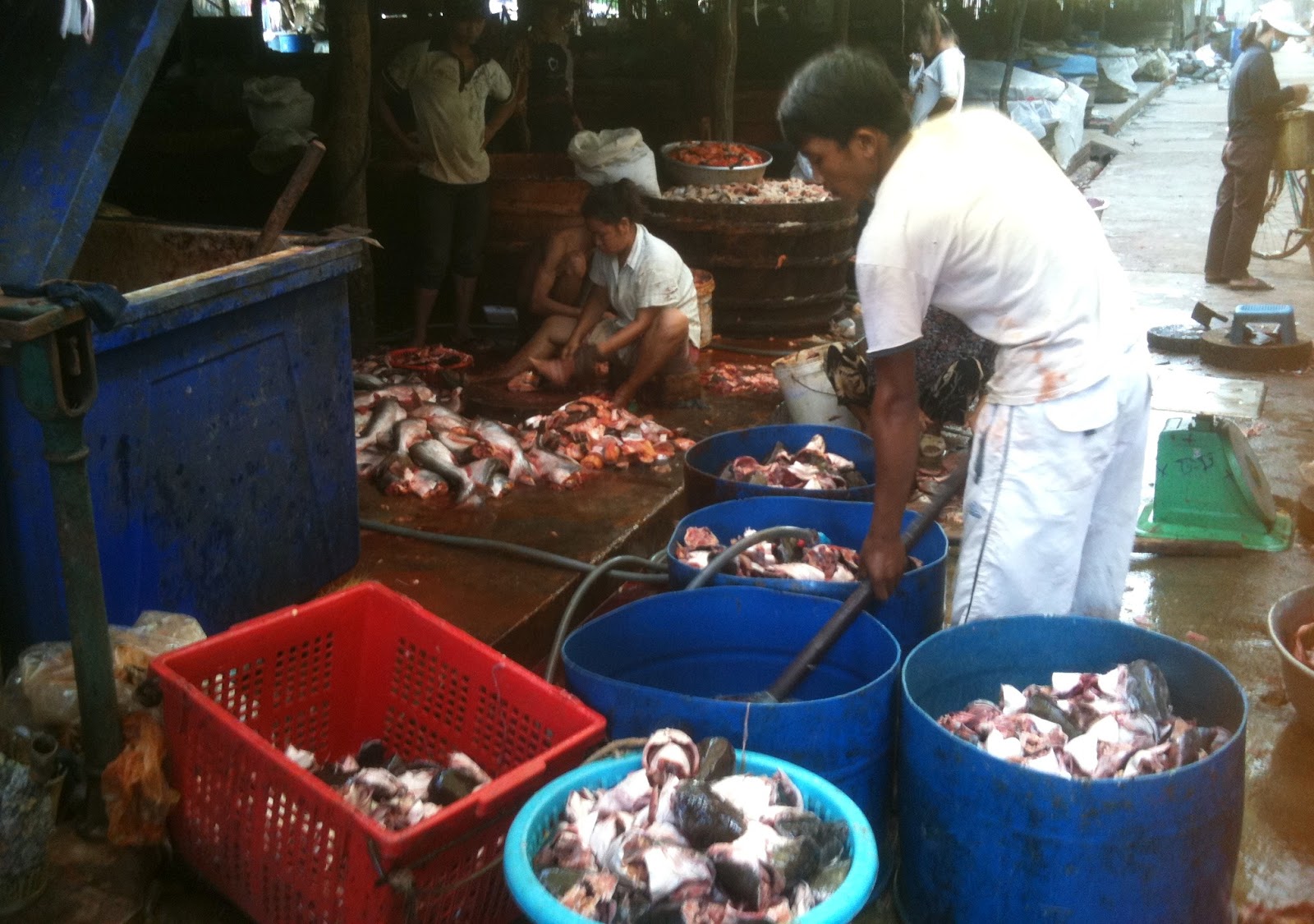
I was in an area where no-one speaks any English,
and I’d got lost trying to find what I’d been told was one of the smelliest places in
the world - Cambodia’s prahok-making hub, Phsar Prahok (fish paste market), on
the banks of the Sanke river near Battambang, where hundreds of tons of
freshwater fish are bought and sold each year.
How anyone would ever know it was one of the smelliest
places in the world, I have no idea, and I’ve been to a few. But mention the
name and even Cambodians hold their nose. I kept cycling up and down a mud track
lined with stalls, and stopped to ask people for directions. But no-one knew what
I was going on about.
The smell of rotten fish was definitely getting
stronger though. There was just a gentle breeze in the hot midday sun, but
sometimes with the wind on my face as I cycled, there was the distant whiff of Cambodia’s
infamously smelly fermented fish paste.
I kept cycling, and then stopped to ask an old woman
for directions. She was selling fresh spring rolls at the side of the road. She
had five chairs outside her stall, and her cats took up two of them. I didn’t
want to push them off. They looked vicious. The sort of cats used to keep snakes
away.
I thought about dark, hooded encounters with monocled
cobras hissing like garage tyre inflators. One of the cats yawned at me and
stretched out its claws. It licked its lips, and we both looked round in the
same direction. The wind had definitely changed. The smell of rotten fish was coming
from somewhere behind those trees to the north-east.
I asked the woman again and she kept shaking her
head when I said Phsar Prahok. Then she asked if I could speak French. She
started to babble and slowly a few words came to me, and before I knew it she
was shouting Phsar Prahok exactly the way I’d said it to her, and I’d gone
through a number of possibilities.
She slapped me on the chest, as if to say ‘why
didn’t you say so all along’, and then pointed to where the ginger cat was
drooling. A mile later, the stench of fermented fish was breathtaking. It
smelled worse than the crocodile farm I’d been forced to spend two days in for
a story about whooping tourists hurling live chickens and ducks into crocodile pens.
It’s so strong if you get some on your hands while dipping
chunks of barbecued veal and raw vegetables in prahok sauce, you soon know
about it. Even bleach doesn’t get rid of the smell. Or as someone once said: “To describe prahok as
pungent is being too charitable. It smells like it should be buried with corn
seed.”
There was a huge fish processing plant hidden behind
iron gates and then further on, where the boats were moored on the Sanke, a
long line of huts filled with people covered in fish guts. Men were offloading fish they’d netted from the river,
and the locals were sorting them into plastic barrels and crates before the
real process of prahok fermentation would begin, exactly the way their ancient ancestors
had done to preserve fish and guarantee a year-round supply of protein.
The fish are cleaned and then salted and mashed
underfoot in barrels before being left to rot in the sun for a day - which
helps kick off the fermentation process. More salt is added. Then they are weighted
and left in huge barrels for months, depending on the desired taste or price,
with prices rising in the rainy season when the paste becomes scarce.
River fish are put in barrels and salted...

The fish ferment and become a grey, cheese-like paste...

Prahok chopped and ready to cook...

The taste and smell varies largely from batch to
batch, depending on the type of fish used, how carefully they’ve been prepped,
and the time, skill and methods used to ferment them. The cheapest stuff is filled with bones, fins, and
scales like the bag of prahok I’d bought from a street stall on the coast last
month. It looked like it had been made from crab bait, and had a disconcerting
ripeness.
In some of the other huts they were smoking and curing fish. Racks of fish no bigger than minnows were being slowly grilled
over charcoal coals until deep bronze and rigid. Some of the larger fish were
being turned into maam, a more expensive version of prahok. It’s salted for 24
hours, then stacked in a jar with salted rice and galangal, and stored for less
time (usually a month) until it becomes sour.
It’s these fermented fish products that define traditional
Khmer food and differentiate it from the strong culinary influences of China,
Vietnam, Thailand, and much further back, India and Sri Lanka.
Many countries use fermented pastes and sauces, of
course, to add the savoury, meaty ‘fifth taste’ of umami to food. China and
Japan have soy sauce and miso made from fermented soy beans, wheat flour,
water, and salt. Vietnam and Thailand have fish sauce, drained from salted and
fermented anchovies, prawns or squid. Malaysia has its blocks of fish paste, or
blacan, and there are many other varieties around the world.

But none of them have the cheesy punch of prahok. Most
people agree it tastes of blue cheese. But it’s more the harshness and
saltiness of Danish blue rather than the creamier, more refined flavour of say
Roquefort or stilton. And always there on the palate and in the nose is the
smack of rotten fish, as though you’ve been cutting skata with the cheese
knife.
For that reason, you don’t see it on restaurant
menus much, especially in places where tourists go. Sadly, many Khmers talk
about how it’s now looked down on by Cambodia’s emerging middle class as a
reminder of the bad old days. They say it’s the smell of poverty - a
remembrance of their tough, previous lives working on the farm.
It’s certainly true of Cambodia’s highly
aspirational pop videos, which always seem to feature affluent, pale-skinned
Khmer couples posing around in shiny SUVs that would keep a whole village in
food for a year. You never see them munching prahok at a street stall. It’s
always pizza, burgers or fried chicken in soulless, chain-style restaurants.
It breaks my heart more than the appalling car crash
at the end, which is how most Khmer music videos seem to end, with a girl
crying hysterically, holding the lifeless body of her boyfriend in her arms,
and screaming “WHY!” at the sky. Which is not the best viewing when you’re
being forced to watch it on a bus clattering away on tyres with less grip than
a pickled egg.
After an hour, I could take no more and cycled
across the bridge to the old woman’s stall. The cats were still there, but this
time there was a seat free. The ginger cat sniffed the air again and looked at
me. The smell had suddenly got a lot stronger.
I want to apologise for the very poor delivery times of the paperback version of my new food book Down And Out In Padstow And London. For reasons that are beyond me, Amazon have had problems distributing recent batches. It’s something to do with the wrong metadata being input, whatever that means. But Completely Novel who print my book have promised they are trying to sort it out.
I don’t know how long it will continue, but I’ve been told that books ordered through Amazon will arrive soon, and they will obviously not take your money until they do post the book to your address. To help remedy this, an eBay page has been set up to sell my book. So if you want the book in the next few days, then cancel your order at Amazon and buy the book HERE... For the eBook version click HERE...
Saturday, May 07, 2011
Phu Quoc: Black Pepper And Pearls

I’ve just spent a blissful two weeks living in a beachside bungalow on Vietnam’s largest island Phu Quoc, a place famed for its world-beating fish sauce, black pepper, and pearls. It all started with a late night conversation in the bar, when Rodney and Josh asked if I wanted to go there with them.
The fang-shaped island – which was briefly captured by the Khmer Rouge during the Vietnam-Cambodia war in the 70s - is only a short boat ride from Sihanoukville, or at least it should be. But because it’s owned by Vietnam (an issue still hotly contested by Cambodians, who call the island Ko Tral), you have to travel for hours overland to the border crossing at Ha Tien, and then get a ferry from there, meaning the journey takes about seven hours instead of two.
View Larger Map
They are talking about opening up a ferry route direct from Sihanoukville soon, but anything involving the foot-dragging Cambodian government often takes years to arrange. For instance, there’s an international airport already built in Sihanoukville, but due to squabbling between foreign investors and Khmer officials, it’s been standing there empty for years. It’s incredible when you think that the only plane in the city sits under a hangar in the middle of a Russian-owned nightclub, called imaginatively enough Airport.

Josh said he was hoping to persuade his wife Loung to go with us. But he’d been warned that Khmers aren’t good travellers. The vast majority of the population have never been abroad – and are deeply distrustful of foreign food. Tom told him when he took his Cambodian girlfriend to Vietnam, she’d hardly eaten anything in eight days.
You wouldn’t think the Khmers would be so picky when you see them tucking so readily into raw duck foetus, fried tarantulas, boiled snakes, and frogs stuffed with oranges. But it’s not that Vietnamese food is so different, it’s just that the Cambodians view their sworn enemy as a marauding demon race who eat pickled babies and other unspeakable meats, a view shared almost as enthusiastically by the Thais, and find absolutely everything to do with them hard to stomach.
Josh and Rodney said we’d be leaving on the Thursday, and over the next two nights I taught Akara how to make the kebabs, and the night before I left I made a new batch of chicken for her. Then we headed off on a white knuckle taxi ride to the border. I was the only one with a Vietnamese visa. The others said you didn’t need one as long as you told the immigration officers you were only going to Ha Tien. They said no-one ever checked your visa on the boat to Phu Quoc.

On the way, we almost hit a cow and two cyclists as the driver overtook on blind bends and threw his Toyota over the red dust roads with one thumb permanently fastened to the horn. We stopped in Kep-sur-Mer, a former colonial retreat for the French elite later obliterated by the Khmer Rouge, and had breakfast at the crab market.

Wooden, ramshackle restaurants were perched on the narrow beach (above). They were so near, they often flooded at high tide. Nothing had been built in Kep for years - it was definitely the water getting closer. Families were dragging crab pots like sledges over the coarse sand to position them 100 yards out for the tide change. Boys were spear fishing near the rocks as long-tailed fishing boats waited for dusk. A woman knelt over a bucket as she picked through hundreds of small crabs.

It was only 10am but the restaurant barbecues were already lit, grilling sumptuous seafood as fresh as your hat. A group of Cambodian fishermen were sharing a bottle of Johnnie Walker Red Label and singing in one corner. They’d probably just got back from a night on the waves.

I ordered a plate of grilled prawns. They came with a side dish of sea salt and lime juice mixed with the local Kampot pepper, an incredibly aromatic spice long prized by chefs in Europe. Two years ago, it became Cambodia’s first product to be awarded Geographical Indicator (GI) status like champagne and Melton Mowbray pork pies. But just 30 years before that, the country’s pepper farms were all but destroyed by Pol Pot, who ordered his black-clad automatons to turn the palm-shaded vineyards into rice fields.

As we left town, we saw more bombed out villas and I imagined what the place must have looked like before the war. It took at least an hour going through customs. A sour-faced official kept grilling me about why I had a visa for Vietnam and my travelling companions didn’t. He clearly knew they were heading to Phu Quoc. Eventually his tone changed and he pulled out a wad of notes from his pocket and asked if I wanted to change some money.
We descended from the ferry into chaos on a long narrow pier crammed with motorbike taxis. We rented three beachside bungalows, surrounded by cashew nut, water apple and star fruit trees. It was incredible waking up and picking a mango for breakfast.

It soon turned out Josh had the whole trip planned out in irritating detail. He said that night we’d head down the coast to a pearl farm owned by a few antipodean friends of his.
“They’re big drinkers” he kept saying. “They’re definitely big drinkers.”
He said expats often converged there on Friday nights and it was traditional for everyone to bring something to barbecue. I knew what was coming next.

The market was a seething, fishy circus, and mopeds battled with pedestrians and stall holders along the narrow street. I bought 2kg of pork shoulder, tomatoes, onions, garlic, chilli, coriander and limes to make kebabs. Then Josh remembered something.
“We need a banana for the monkey,” he said. “We can’t turn up without a banana for the monkey.”
The pearl farm was a stunning place, overlooking a deserted beach. The pearl boys were as tough as Josh had described. They were enormous men with huge, barnacled hands. But then they had to be. They had hundreds of thousands of pounds worth of pearls growing in the sea, and had an armoury of shotguns and high-powered spear guns to ward off pirates.

The monkey devoured the banana in seconds, but I didn’t get too close. It looked friendly enough, but they kept it on a leash because the last one had bitten someone’s ear off. It was best friends with a small ginger cat. One of the pearl boys picked up the cat and put it next to the monkey. It immediately began cuddling the cat, and they sat there quite happily for a few minutes. The monkey had brought it up as a kitten and would carry it up trees until it got too big to lug around.
We all gathered near the oyster beds to watch the sunset (below), and then there was a power cut and I had to prep the pork kebabs under torch light. It was an almost impossible task, and it was only the bluntness of the machete that stopped me losing a finger.

They told me they had a different method for producing pearls. Normally farmers nucleate the oysters by cutting opening the hinge and inserting a piece of grit, but they inserted a small pearl to speed up the harvesting process, which can take up to five years. Some of the necklaces they had on display in the museum were priced at $15,000 (£10,000).
We dug into the kebabs, and shared a huge red snapper between us, but there were no oysters to be had. We drank from pint glasses as rum bottles were passed around the table, and soon I was sitting in a brain-fogged haze, looking out at the dark sea and wondering at the undiscovered, man-eating leviathans it contained, while being mauled to death by worryingly-large mosquitoes. Scores of squid boats were anchored in a long northerly line. There were so many out there, their lights looked like a distant motorway at night – a memory far removed from the tranquility of that mosquito-filled, island paradise.
Subscribe to:
Posts (Atom)