Showing posts with label sour soup. Show all posts

Tuesday, September 20, 2011

Cambodia: An Explosion Of Sour Flavours


For me, the defining characteristic of Khmer cuisine has to be its sourness. Cambodian food embraces tart flavours like no other country I’ve seen before.

Diners screw up their mouths and smart their faces in a gesture that in most countries would be seen as a look of utter disgust, a confirmation that the dish was truly awful, and a look so solidly damning in appraisal it would no doubt test the breaking point of even the thickest-skinned chef.

But in Cambodia, it’s a sign of sheer gastronomic pleasure. As lip-puckeringly unripe as possible, as citrus as you can make it, as zesty as it comes. The tartness is as much treasured as the buttery softness of freshly-boiled lobster or the earthy richness of truffle in more glamorous cuisines.

There’s no call for cream sauces. And certainly no meatball in veloute sauce soups, followed by a kilo of specially flown-in caviar sandwiched between sour cream-strewn, warm potatoes, as one extremely rich Belgian man likes to make for his dinner parties out here.

It really is a land of pickles and green fruit. Lemon, lime, tamarind, vinegar, unripe fruit, mysteriously bitter herbs and leaves foraged from the hedgerows and rice paddies (it’s hard to find a direct English translation for some of them), and the unmistakable, blue cheese acidity of prahok fermented fish paste are used to bring sour notes to food.

Another is preserved lemon (top pic), integral to Cambodia’s famous ngam nguv soup, but rarely found anywhere else in Asia. The lemons are dried in the sun, and then soaked in brine, and a few quarters poached in a soup or stew give a citrus tang immediately evocative of Moroccan cooking.

The best ngam nguv I’ve tasted so far on my travels was in a Khmer-owned ‘happy pizza’ joint that pepped up the dish with ‘half a finger’ (as the sous chef demonstrated) of the local oregano. Or at least they used to until the payments to the police got too big.

He made it for me with chicken, but said Cambodia’s “number one” version is made with duck, and is traditionally served at weddings. A whole duck is chopped up with a machete, and the bones are sucked from the lemony broth to toast the happy couple, he explained.


It’s about as truly Cambodian a dish as you can get (pic above) – bearing all the fragrant, fresh, fast, fat-free hallmarks of Khmer cooking. The smallest globules of oil glint away on the surface. There’s none in the broth itself: it’s from the browned, nutty, fried garlic – a garnish used widely in Cambodian cooking, especially in rice soups.

But it’s not just the absence of fat that makes it distinctly Khmer. Nor is it just the ubiquitous culantro - called chee bon la, or chee barang (“foreign coriander” in Khmer) – a strong, coriander-tasting herb as important to Cambodian food as it is to the many sofrito recipes of the Caribbean, from where it originates.

It’s the way it glorifies zesty flavours – first, fragrant lime leaves infusing the ‘stock’ in the same way that European cooks would use a bay leaf, and then the all-powerful addition of salty, bitter lemon.

But just when it gets too much, there is a different zesty hit from the lime leaves, and a tickle of warmth from the chilli, and then a strong blast of coriander from the culantro, and then finally a deep, wonderfully nutty taste of fried garlic. It’s easy to see why it is considered the king of Cambodia’s many sour soups.


THE OLD woman poured a small bottle of drinking water into a wok, lit the hob, and then threw in three kaffir lime leaves and waited for the liquid to boil. Her sous chef diced half a small chicken breast, and then chopped up a preserved lemon, pips and all.


Another man, who was no doubt the owner because he asked me twice if I was going to pay for the meal, bashed three garlic cloves with the end of a rolling pin to remove the skins, and then chopped them.

The old woman, who was clearly in charge and wouldn’t let anyone near the stove, added the chicken breast to the bubbling water.


She then added the lemon, a few diagonal slivers of red chilli, and a sprinkle of salt, sugar, and half a tablespoon or so of fish sauce.


She let the soup bubble away for a few minutes, topping up with a splash of water from time to time, as she made the garnish.


She heated a smear of oil in a frying pan, and added the chopped garlic.


She fried it until it was brown, but not burnt, and then tilted the pan to let the oil drain off.


She let the soup boil for another minute.


It was then ladled into a bowl, the top garnished with nutty garlic and chopped culantro. A soup made from scratch in five minutes – the perfect healthy fast food.

Friday, September 09, 2011

Cambodian Cooking: The Khmer Love Affair With MSG


I’d been told about the dingy, sticky-tabled cafe by an ex-pat New Zealand chef called Dave, who said it was one of only three restaurants in Siem Reap that excelled in traditional, home-made Khmer food.

I found the place, and its sister restaurant a few yards away, opposite KFC. In the same 100 yards of road, you have the two extremes of Cambodian cooking.

A Khmer tasting menu at the luxurious Hotel De La Paix, boasting dishes like pan-fried broma fish with feroniella sauce, stir-fried frog with fresh ginger, and coconut heart and prawn salad. And the Khmer greasy-spoon offering equally delicious meals like ‘fried dry fish with watermelon’, ‘English beef steak’ (below - which turned out to be loc lac with a fried egg perched on top), and the brilliantly-named ‘farmer sour soup’ for a fraction of the price.


“It’s a bloody great place,” said Dave. “It’s just a shame they use MSG – but then try finding a place that doesn’t use the stuff here. The Khmers swear they don’t use it, but they all do! Go into any home, and you’ll find a bag of the stuff next to the cooker, I bet you. They even put the bloody stuff on the fruit!”

He had a thing about MSG. Like most expats he rarely listened, and was an expert on everything. He could talk at length about how the Khmers had taken to flavouring enhancers like bears to a honey vault after the country opened up to the outside world after the civil war, and how the stuff absolutely ruined food, and was the complete antithesis to a cuisine based on fresh, seasonal ingredients.

He was right though, even if he did take hours to say it. Monosodium glutamate somehow rewires your taste-buds so that everything tastes the same. The fresh vegetables and meat and carefully selected herbs so typical of traditional Cambodian food get lost in the mix, and instead you get an unwavering band of monotonous taste. When you try the same traditional dishes without MSG, they’re so much better and more defined.

Fried snakes flavoured with MSG at a bus stop near Phnom Penh...

Dave liked to tell me how he once worked at a Cambodian cooking school, where the Khmer cooks would drum it into the tourists how important it was to put MSG in everything.

“What the hell are you telling them to use that bloody stuff for?” Dave asked on his first morning.

They just pointed at the packet.

“It Unilever – it good one,” they said.

He said Khmers held all imported foods with the same reverence – particularly the dreadful bottled sauces fast making traditional Cambodian cooking a lost art.

Dave’s evidence seemed to be largely based on the fact that he once gave his housekeeper money to buy mushrooms from the market, but he gave her far too much, so instead of buying fresh ones, she spent the money on a small tin of mushrooms in brine.

“Why have you bought those bloody things?” Dave asked her.

She pointed at the label. “They from China,” she said proudly.


I TRIED most of the dishes at the cafe over a few days, and they were all good, apart from the smoked fish and green mango salad. But the two that really stood out were ‘Siem Reap sour soup’ (above), and pork fried with hot basil, lemon grass and chillies (simply called ‘hot of pork’ on the menu).

The soup – one of about 15 they did - really was an explosion of tart flavours. It’s usually served with one salty, one sweet, and one spicy shared dish to balance the meal, helped down with the always-present bowl of sticky rice and pickles.

The sourness of the tamarind and green tomatoes, together with the mild spices and careful use of fish sauce, makes it uniquely Cambodian in character. The only spice comes from the rather docile kroeung curry paste, used as the base for Khmer curries. The kroeung – heavy in lemon grass, galangal, garlic and turmeric, but not chilli – helps thicken the soup, and leaves a pleasing, golden rim on the bowl.


Like many Cambodian dishes, the soup is incongruously delicate and fresh, and yet ferociously sour at the same time. Most Cambodian food is incredibly quick to make, and most restaurant dishes are made from scratch – even soups. Because of the speed of the cooking, there is no lost amalgamation of flavours. Each ingredient stands out, and adds its own character to the dish.

The addition of holy basil leaves – called hot basil in Cambodia – a minute or so before the soup is finished gives it a refreshing, minty taste that hums of cloves. It is a clever addition because it keeps refreshing your palate so that you keep tasting the sourness of the soup again.

Like the Thais, the Cambodians love hot basil – a sacred herb used to treat an endless list of illnesses from malaria to manic depression. It is different to sweet or Thai basil because it doesn’t have the same aniseed taste, and its spicy, clove-like flavour intensifies with cooking.


The Cambodians also cook like the Thais when it comes to soups, prepping everything in bowls first, and controlling the cooking with regular splashes of water to kill the heat – but not too much to lose the fast bubble.

It’s amazing how little oil Khmers use compared to other countries – even in stir-fried dishes. They pour about half a tablespoon in a wok, tilt it around so it smears the sides, and then spoon the rest out. They are so sparing, you rarely see an oily glint to a dish – which is why experts say Cambodian cooking, with its heavy use of fruit and vegetables, and dairy-free recipes, is one of the healthiest foods in the world.

Cambodians also have their own peculiarities when it comes to meat. In most of the Khmer restaurant kitchens I’ve been into, the chefs keep the meat in the freezer, so when an order comes in, they chop the frozen chicken, pork or beef into cubes or thin slices, and it quickly begins to defrost in the horrendous heat (easily the worst thing about cooking in a fan-less kitchen in Cambodia).

Most of the defrosting is done in the wok, which despite being an obvious health hazard, also negates the other health hazards of meat sitting around in hot kitchens or warm, crammed fridges.


THE COOK cut half a frozen chicken breast into cubes, and then sliced some onion, green pepper, green tomato and fresh pineapple, and put them in a bowl with the chicken.


She heated a wok, poured in a little oil, smeared the sides, and spooned the rest back into an old paint tin. When the oil was beginning to smoke, she added two teaspoons of kroeung curry paste, and stir-fried it for 30 seconds.


She then added the rapidly defrosting chicken, and fried it for a minute until it was sealed but not browned.


She poured in a little water, let it bubble for a moment, and then tossed in the green tomato, green pepper, onion and pineapple, and continued to stir.


She fried it for another minute, and then added 250ml of water, and boiled the soup rapidly for three to four minutes before adding a splash of tamarind juice (below - made by pouring hot water on to tamarind fruit and soaking overnight) and a dessert spoon of fish sauce.


She then added a little salt and sugar, and a liberal sprinkling of MSG before I could stop her.


She let it boil for a couple of minutes, always topping up with a little more water, and then tossed in a huge handful of hot basil leaves and cooked the soup for another minute or so, adding more water as the broth evaporated.


The old woman stepped back suddenly as a man in his 20s appeared at the stove. The head cook dipped a spoon in and sipped.

He looked thoughtful for a second, and then nodded his head, and turned to the table of condiments and sauces behind him, and reached for the MSG.

Friday, September 02, 2011

In Defence Of Cambodian Cooking

(Above: Prahok...Cambodia's famous fermented fish 'cheese')

I’ve grown to love Cambodian cooking – even though at first I gave it the thumbs down. It’s just a shame how hard it is to find in Cambodia. The proper stuff is hidden away from tourist spots like some fabled Angkor treasure, in people’s homes in the countryside, and occasionally in the restaurants and food stalls the locals recommend.

These are the traditional dishes passed down by memory rather than cookery books, most of which were burned during the Khmer Rouge’s 1975-1979 reign. The natural, primary tastes of salt, sweet, spicy and sour from the foraged herbs, unripe and ripe fruit, fresh vegetables, pickles, and fermented fish that characterise Cambodian cuisine.

(Chicken rice soup - steamed chicken, browned garlic, coriander)

But even then, it isn’t easy. One restaurant or stall does a very good rice chicken soup (above), but little else. Another serves a decent loc lac, but a terrible Khmer curry. One does a decent amok – something that is difficult to find even in Cambodia’s culinary capital, Siem Reap. But it is rare to find a real all-rounder.

So it takes a long time to get a sense of how varied and wonderful Cambodian cuisine can be. And why Cambodian food experts like chef and author Joannes Riviere describe it as one of the most balanced, healthy and fascinating foods in the world.

Like its people during the horrors of Pol Pot’s murderous regime, which saw nearly a quarter of the population worked, starved or tortured to death, Cambodia’s food has largely been ignored by the outside world.

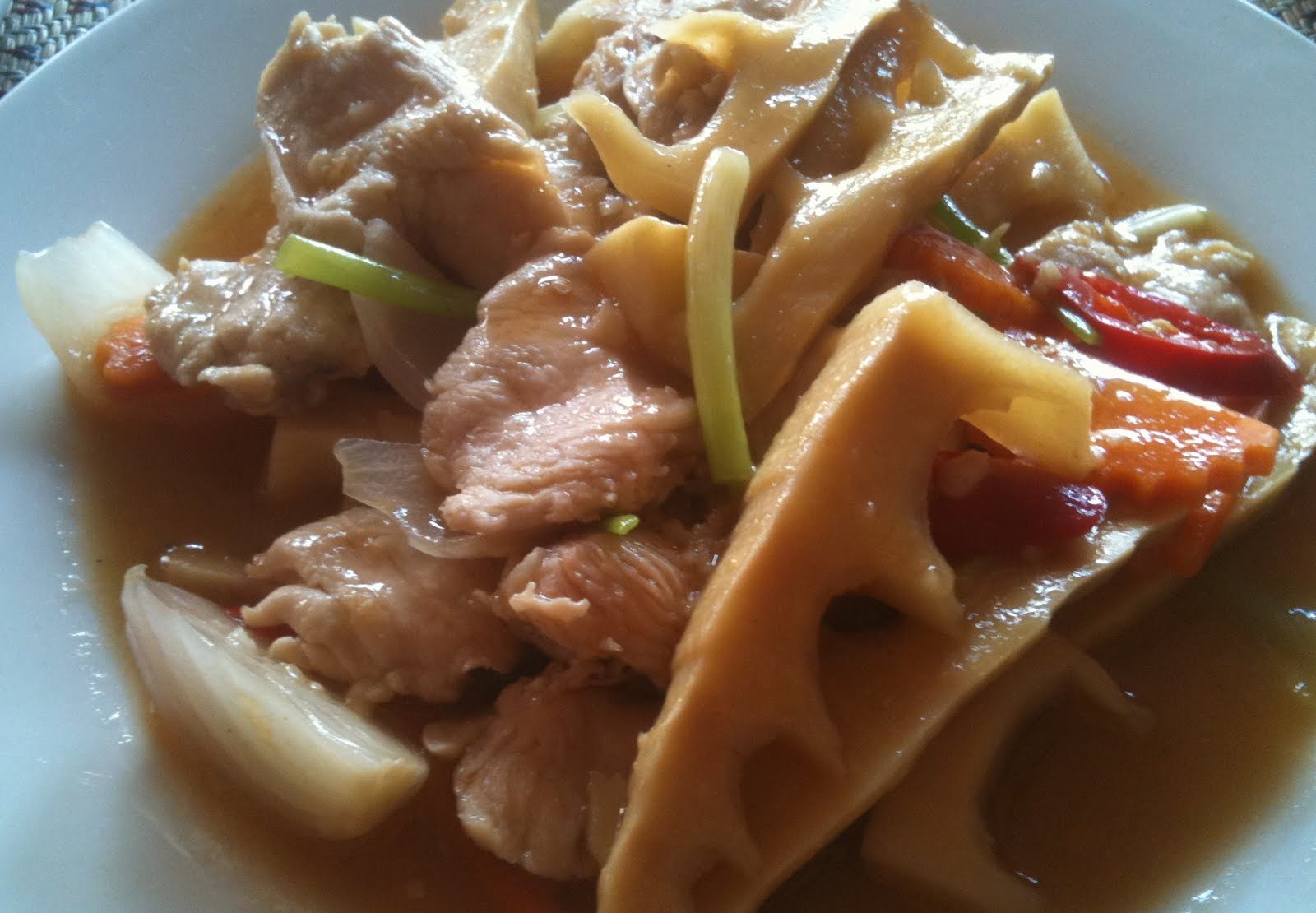
(Chicken wok-fried with bamboo shoots)

It is mostly dismissed as “Thai food without the chillies”, and sometimes “a bit like Vietnamese food but not as good”. But that is a disservice, as although it is definitely a magpie cuisine and shares a huge number of dishes with other countries, particularly China, Vietnam and Thailand, it has its own character and legacy.

The Khmer empire stretched across Vietnam and Thailand for hundreds of years, and gave their respective foods as much as it stole.

Before that, it was heavily influenced by Indian traders, who brought tamarind to the country (an essential ingredient in Cambodia’s many sour dishes), and inspired cooks to blend spice pastes, which became kroeung (Khmer curry paste), with the addition of pounded lemongrass, lime leaves, and galangal.


Later, Chinese, Cham Muslim, Thai and Vietnamese immigrants and conquerors brought their influences, which you can see today in the diversity of cooking styles and flavourings from soya and oyster sauce-based stir-fries to crispy duck to steamed, herb-packed spring rolls (above) to fried rice dishes to beansprout and shrimp-filled pancakes.

And then the food changed again under French rule – this time with the introduction of baguettes and thick beef stews (below), just like in neighbouring Vietnam.

(Khmer beef stew)

So what is traditional Cambodian cooking? The two words that probably best sum it up are freshness and seasonality. Cooks use what’s around them, whether it’s ripe or unripe, and forage in the hedgerows and rice paddies for mysteriously sour herbs and leaves that do magical things to a simple piece of meat or fish.

It’s amazing how green and crunchy everything is. Most dishes contain herbs – varieties of mint, coriander, basil, and sawleaf - sometimes cooked but mostly raw, and come with trays of crisp vegetables like banana blossom, long beans, cucumber and cabbage.

(Banh chiao: Pancake with prawns, minced pork, beansprouts)

There are no reduced sauces, dairy goods, or pretty much any use of fat as you’d find in more glamorous cuisines, and yet the dishes are delicious, and what they lack in refinement and technique they make up for in freshness, colour, and taste.

The flavour that really defines Cambodia is prahok – freshwater fish fermented in barrels of brine for so long they acquire the powerful, roof-of-the-mouth-etching taste of blue cheese.

(Fish in a salt barrel at a prahok market near Battambang)

It sounds awful, but is curiously addictive. The milky, grey liquid left behind is used as a sauce, and the meat is pressed into a paste (top pic). The sauce – sometimes with the addition of chillies, chopped herbs and peanuts - is served as a condiment with barbecued meat and fish, whereas the paste is best fried with beaten eggs, chopped pork, and finely chopped vegetables to make Cambodia’s deliciously savoury omelette.

Fish sauces are used across the world, of course, from Roman-inspired thick anchovy essences to the whisky-coloured liquids of Vietnam and Thailand. But none of them have the peculiar, cheesy-salt taste of prahok.

Another ‘unique’ flavouring is preserved lemon (below), used in Cambodia’s renowned ngam nguv chicken soup, but rarely found anywhere else in Asia. The lemons are dried in the sun, and then soaked in brine, and a few quarters poached in a soup give a citrus tang immediately evocative of Moroccan cooking.


But there are other, less defining, characteristics too. Khmer noodles (nom banchok) are made from just rice, water and salt, and so lack the richer, eggy flavour of Chinese noodles and pasta. Its dumplings are made from cassava (and sometimes with yams or sweet potatoes) rather than flour – and are often filled with fresh vegetables. The ones containing chopped kale are so delicately seasoned they taste like bubble and squeak.

(Amok - a highly contentious recipe - as served by a chain-style restaurant boldly calling itself Amok, in Siem Reap)

For a cuisine so overlooked, it’s surprising how great – and varied - some of its dishes are. Why amok (above) became its best known meal is anyone’s guess.

It really is quite average compared with, say, its incredible fried aubergine with minced pork dish, which combines the grandest tastes of Mediterranean cooking with the sticky sweetness of The Orient.

Soup is integral to Khmer cuisine, and is served with every meal, where each of the shared dishes brings sour, sweet, spice or salt to the always present bowl of sticky rice. But so are salads, and you'll usually find a dozen of each on most menus.

When you find a good place, Khmer beef salads can be as good as any carpaccio, escabeche or ceviche-style dish I’ve ever tasted. The sirloin is thinly sliced and marinated in lime juice and spices for a couple of hours.

The soused meat and juice are then tossed in a vibrant salad of onion, carrot, green tomatoes, green pepper, white cabbage, toasted peanuts, green beans, chillies, purple shallots, garlic, lemon grass and basil sprigs. They make the dish in the north-east of the country with goat meat, which melts in your mouth and has a far gamier taste.


But its most famous salad has to be smoked fish and green mango. The fish (above) are barbecued on a wooden grate over smouldering coals, sometimes for as long as eight hours, which gives them a strong, smoky taste and a chewy, dried texture.

Half of a small fish is broken into pieces and pounded in a pestle and mortar with chillies and garlic, and then tossed into strips of green mango, charred peanuts and herbs (below). The salty smokiness of the fish cuts through the sharpness of the fruit, and makes a truly great dish - and, in the culinary pragmatism of all peasant dishes, especially Cambodian ones, makes a little bit of protein go a long way.


Cambodia’s gravlax-like phork (cured fish with fermented black rice) is another winner as are its pickled vegetables that are often served in saucers with a main dish. The veg is cut into julienne strips and packed in jars in a pickling mixture of salt, brown sugar, galangal, kaffir lime leaves, lemon grass, and water that rice has been washed in to give it a sour taste.

They don’t go in for desserts much. Usually it’s just a plate of tropical fruits, sometimes in a coconut sauce. But who can blame them given the quality of the fruit? The country is famous for its foul-smelling durian, the most highly-prized being from the Kampot area, which also supplies its incredible pepper – the first food in the country to be given Geographical Indicator (GI) status.

But just as good are its leathery-skinned mien, which have a sugary, marshmallow taste, green oranges from Battambang, and amazingly sweet dwarf bananas.

If you ever come here, throw away the guidebook, avoid all Westernised restaurants showcasing Khmer food, with their trendy, orange sofas and cocktail bucket-quaffing tourists, where the food tastes like it’s been cooked at TGI Friday’s, and eat what the locals really eat - in their homes, and at stalls with the biggest queues - and you can still find proper Cambodian food, and it really is, or at least can be, wonderful.

Sadly, it is a cuisine fast disappearing, but more on that next time.

:: The above is based on personal experiences, research, and interviews with dozens of Khmer and Western chefs and restaurant/stall owners in Cambodia. If you disagree with any of it, or think I have missed something, and/or would like to add thoughts of your own, please leave a comment below.